Bauerfeind’s Environmental Management
Working for sustainable growth
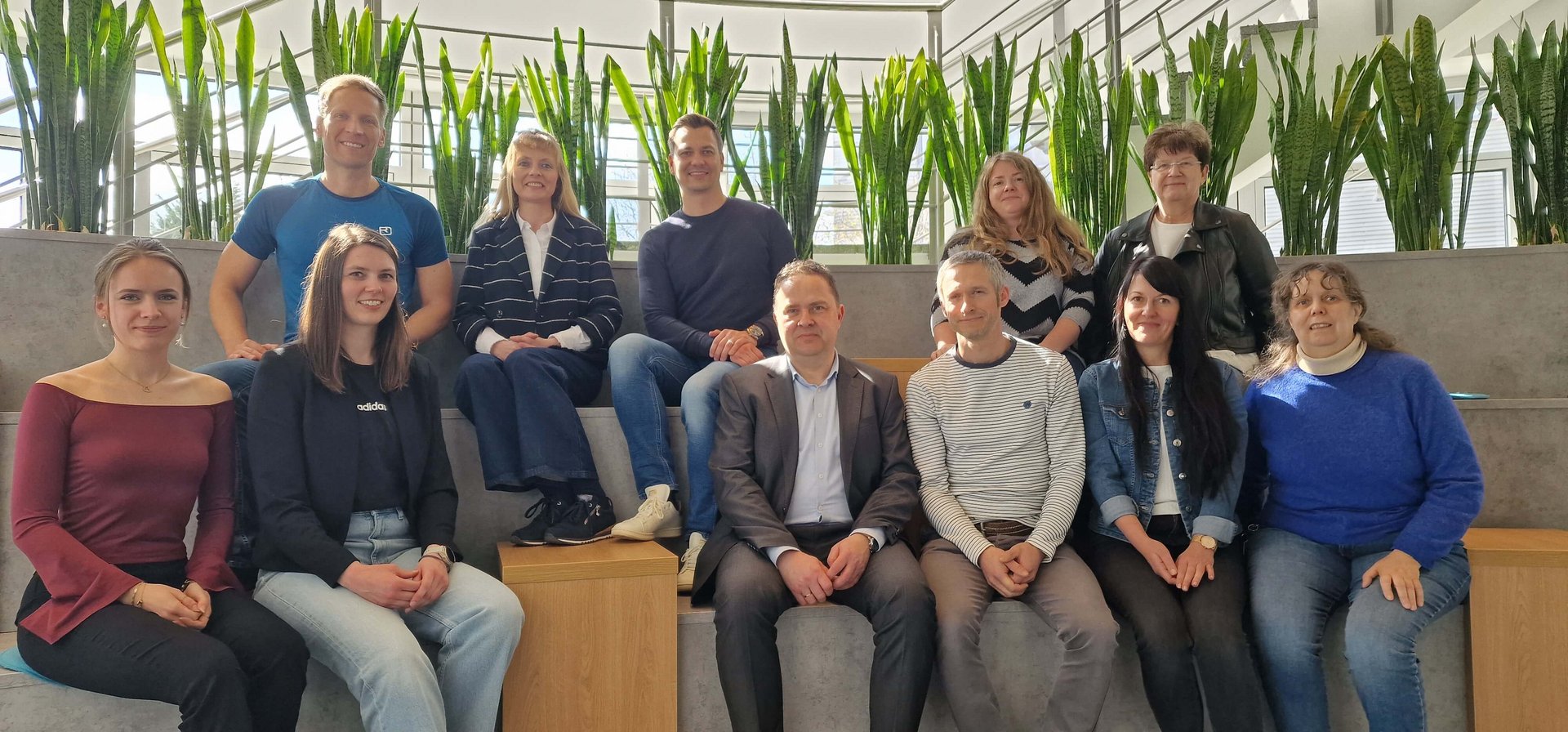
For Bauerfeind, sustainability is not just a theoretical concept. It is incorporated in day-to-day work. Our Environmental Team plays a key role in this, constantly making sure that our processes protect resources more effectively and are more environmentally friendly. Head of the Environmental Team – staffed by members from different departments – is Environmental Manager Christian Gerbert. He works in the RAC Department (Regulatory Affairs & Certifications) and summons the “interdisciplinary group of environmental experts” every three months. In his interview, Environmental Manager Christian Gerbert explains what environmental management refers to and how the Environmental Team works.
What exactly does Environmental Management mean with regard to our day-to-day operations?
“Every single day, we work on improving our environmental performance and on minimizing our negative environmental impact in all areas as much as possible: reducing waste, i.e.: using resources more efficiently, closing material cycles, and saving energy.”
What role does the Environmental Team play?
“Together with our Chief Technical Officer Katharina Dietrich and the 15-strong Environmental Team, we develop objectives and measures that are documented every year in an Environmental Program. The members of the Environmental Team take the issues back to their departments and return to the Environmental Team with new ideas. The Management Team also helps set the environmental objectives. That means every single employee is involved in sustainability.”
Why is ISO 14001 Certification strategically important for our company?
“The ISO 14001 Standard is globally recognized, representing one of the most significant environmental management systems. It has to be verified annually and recertified every three years. That really speaks to its value. We were successfully recertified in November 2025.”
Specifically what changed or improved, thanks to the new certification?
“The ISO 14001 Certification officially confirms our efforts when it comes to the environment and sustainability. Not only does this strengthen our credibility with regard to internal and external stakeholders but is now also an access prerequisite so we can actually work in many areas. At the 2024 Olympic Games in France, for example, sustainability played a key role. It was a deciding factor in whether we were allowed to take part as a supplier. The ISO Certification clearly improves our competitiveness and market access. Various international buyers actually require it now. It’s also an essential criterion in tenders.”
Which milestone makes you particularly proud?
“A major milestone was our first voluntary Sustainability Report in 2024. For the first time, it contains a complete climate assessment which various departments were involved in, as well as an overview of implemented measures in the three ESG areas: Environment, Social, and Governance. This reporting method will be required from large companies in the future in accordance with the European Standard. This report makes us competitive and even gives us an edge over some of the competition.”
In which areas have we already been able to make measurable improvements?
“We’ve made huge progress in particular with waste separation and disposal over the past two years. For example, we’ve defined some of the waste as a by-product so it can be recycled within the meaning of the closed-loop economy: Polyamide and micro Velcro fastening are turned into regranulate by a service provider. That means we’re actually earning money for materials that previously cost us in waste disposal.”
Do you have any examples of employees whose sustainability ideas were implemented?
“Initially, I approached colleagues and encouraged them to suggest ideas. It’s now the other way around! Employees are coming up to me to proactively make suggestions. Gera is also sending lots of ideas for improvement.
Examples of implemented ideas are the inclusion of micro Velcro fastening waste in recycling, changing printed production orders to reusable Kanban cards in the Technology Department, and optimizing cutting in Support Manufacture. Sometimes, it’s the Executive Board that has a specific idea. Changing the filling material from plastic to paper in Central Logistics, for example, is based on an idea by Katharina Dietrich, our Chief Technical Officer.”
So participation is specifically requested?
“Absolutely! Sustainability can only be achieved together. The future depends on what we do today. Sustainability is not an option but a must. All employees are invited to get involved. Anyone who has an idea about how we can save resources during day-to-day operations or make processes more environmentally friendly can contact a manager, the Environmental Management or Ideas Management Teams.”

About Christian Gerbert
Christian Gerbert has been working for Bauerfeind since 2023. Before that, he worked for a large car dealership as a Service Manager for 12 years. Born in Plauen, Gerbert has always loved the environment and nature. Now he can incorporate this love during everyday work at Bauerfeind. Christian is a sports enthusiast and enjoys spending time in the mountains hiking and climbing. Glaciers are a great example to him of what climate change means.