News from the construction site
“Your hornbeams are still saplings”
Transplanting 30 hornbeams from the Tower parking lot to their intermediate location in Bauerfeind Allee was a huge event at the end of April. The plan is for them to be returned to their ultimate destination on the new campus in two years. Nahtlos spoke to Dr. Bernd Küster about the process, why two trees remained, and why old trees can still be transplanted.When we talked to the 57-year-old on the phone, he had just returned from the action: The certified forester has been organizing large tree transplants for Opitz for many years, which means he is out and about a lot.
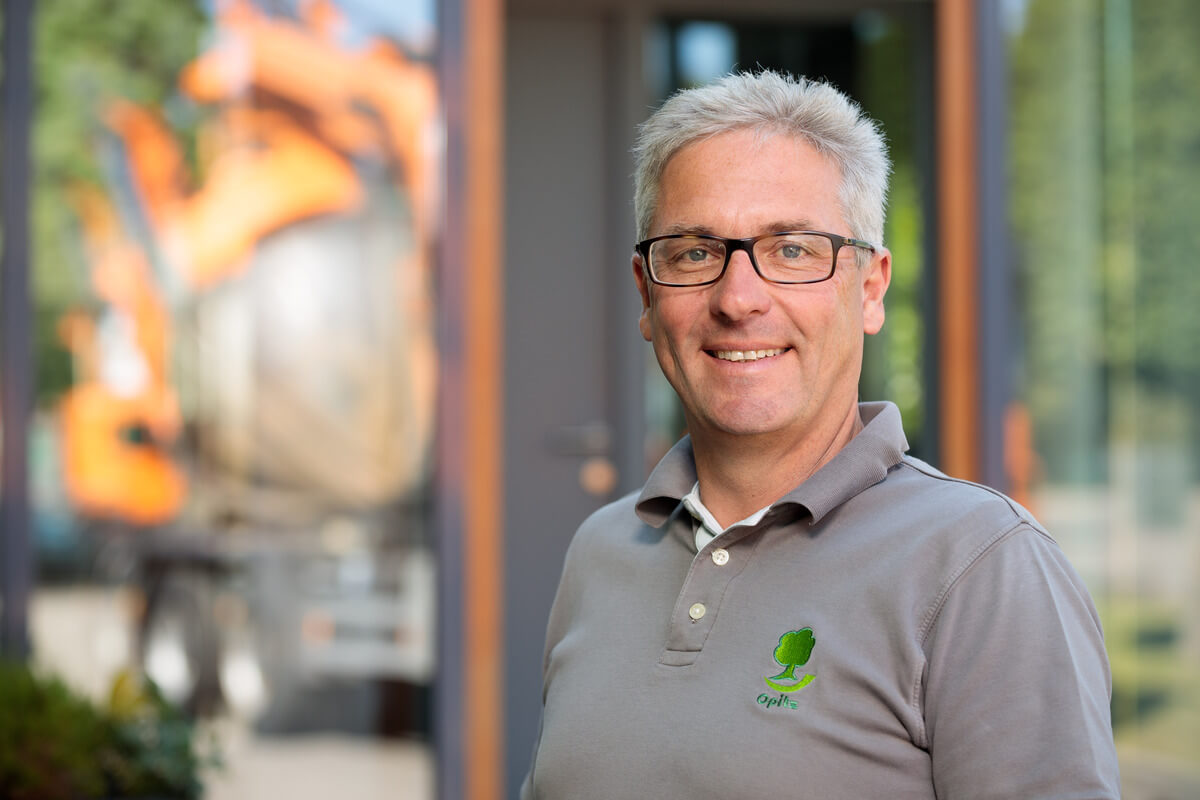
Dr. Küster, where are we catching up with you right now?
Almost on the road actually. I’m just returning from a heavy transport. We accompanied a tree transport in a support vehicle equipped with a warning beacon to secure around 80 km of highway and freeway.
How are our hornbeams doing in Zeulenroda?
Brilliantly! I asked to be sent updated pictures. The trees are still looking really good.
How long will it take for the trees to fully take root again?
During a conventional transplant, it usually takes two to three years until a tree has completely recovered. The situation is different with your hornbeams though: They’re currently in an intermediate location. The plan is for them to make themselves feel at home and grow new roots before being returned to their ultimate destination on the new campus in two years. It’s a little bit like a rehabilitation measure. Trees can recuperate and recover so they will return stronger.
Opitz has transplanted more than a million trees. Did Bauerfeind pose any particular challenges?
Every transplant is a challenge because the conditions are always different, be it ground conditions, weather, or transport. But everything went really smoothly in Zeulenroda. The trees were in top condition and the organization was exceptional. Ms Wimmer (Sandra Wimmer, Team Leader for Building Infrastructure and Value Preservation at Bauerfeind – Editor’s comment) prepared everything perfectly. It was good fun actually.
Two hornbeams stayed behind in the Tower parking lot. Why?
That's right, two trees remained. We were surprised at first, too, and I had to make sure we didn’t take them by accident (laughs). But the explanation is simple: These two trees are seemingly not in the way of the construction work. If a tree can stay, it’s better not to transplant it.
I thought the saying was: “Don’t transplant old trees.” Why can you make it work nevertheless – even twice within two years?
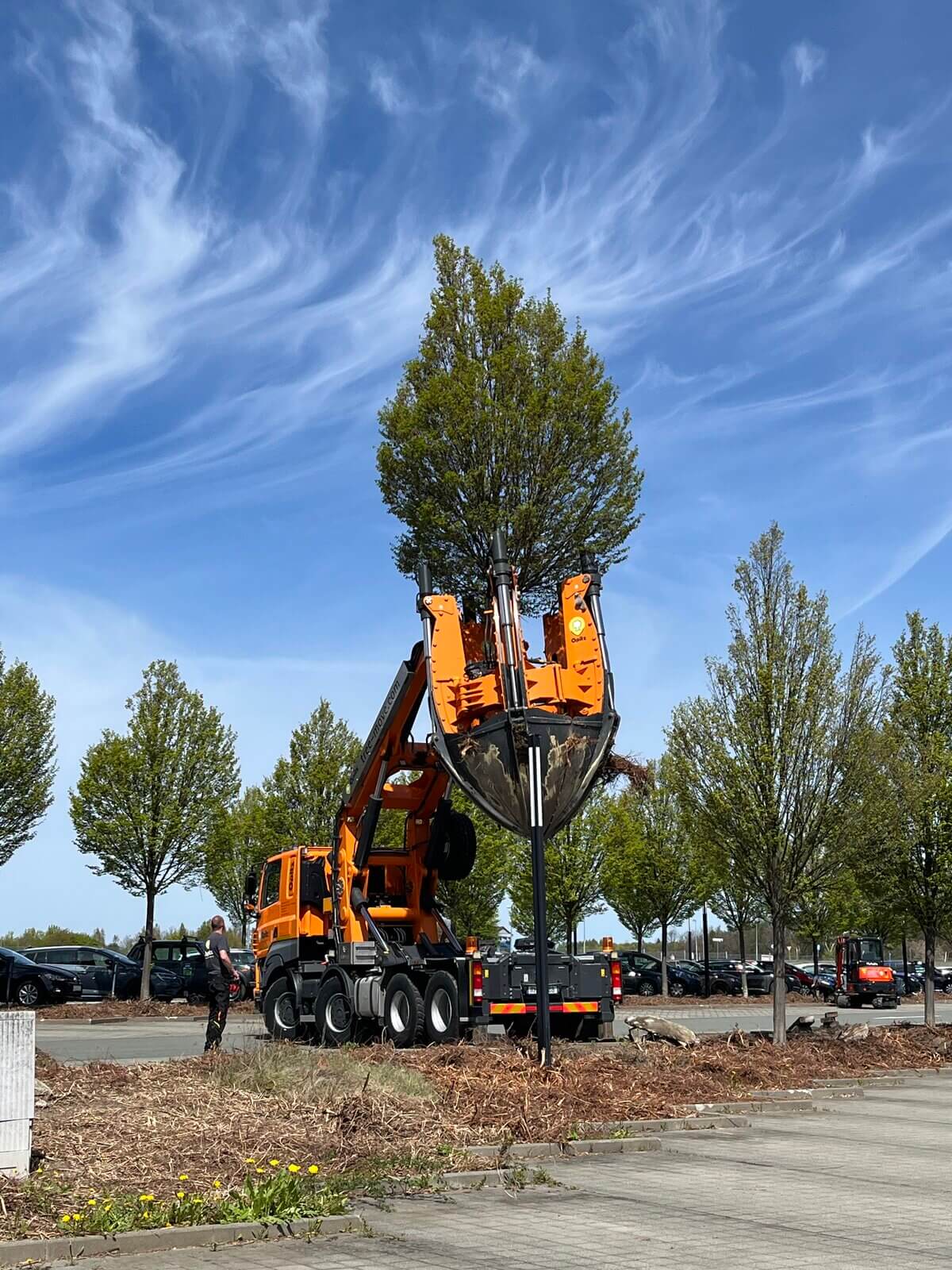
On the one hand, it’s thanks to technology. We work with special tree spade machines that have been designed to gather up as many roots as possible during the transplanting. On the other hand, follow-up care at the intermediate site is key: The roots are cut a little and cared for, and the treetops are cut back to compensate for having fewer roots. Steel cables provide the trees with additional support. Furthermore, they need to be watered regularly and sufficiently.
When it comes to the age: Your hornbeams are a little over 20 years old and almost saplings when you consider that hornbeams can reach an age of 200 to 250 years! We also transplant trees that are much older. But regardless: During a move, the same applies to old trees as it does to old people: You just have to be gentle and look after them well.
What was the oldest tree you have personally transplanted?
It was a 100-year-old oak in the Munich area.
Is there a guarantee that our hornbeams will take root?
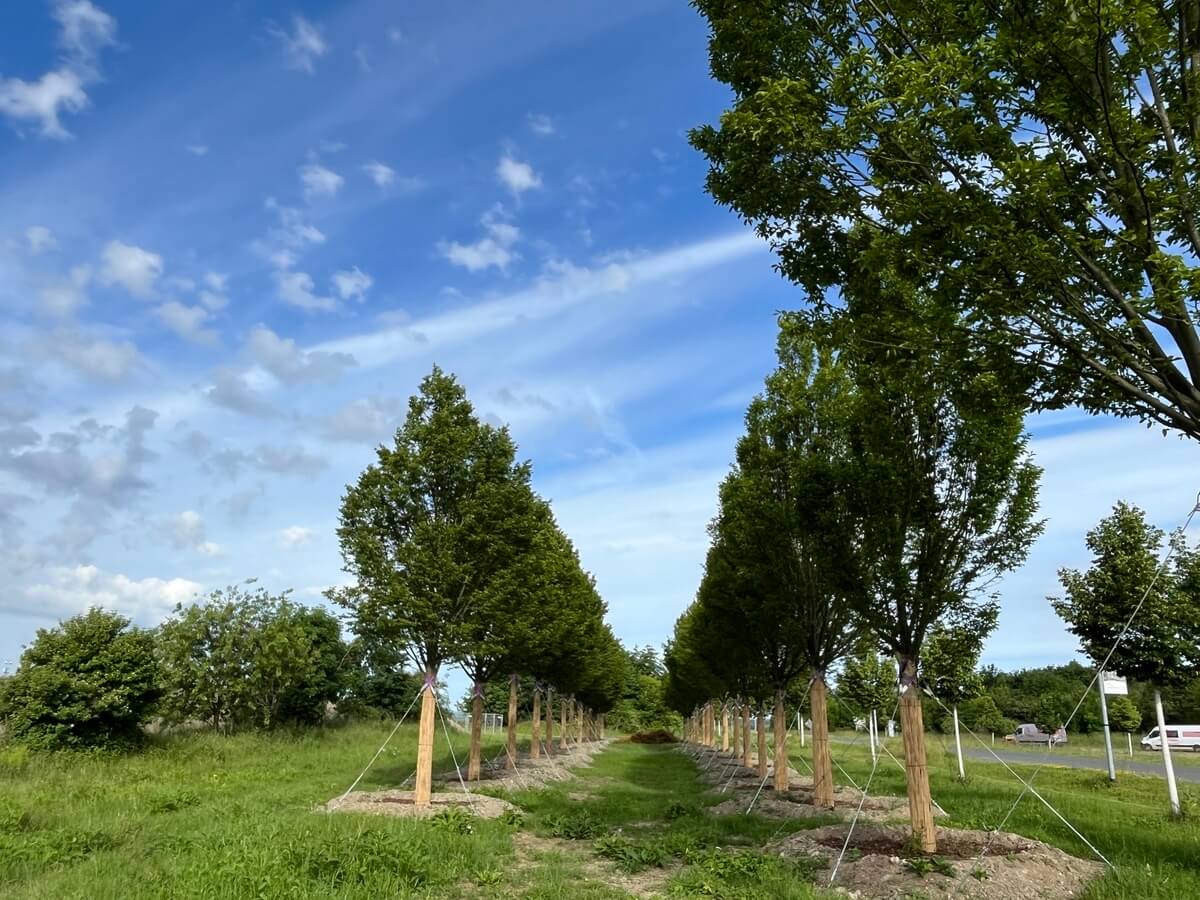
When digging up the trees again, I’ll first take a close look how the roots have developed at their intermediate site. But the conditions in Zeulenroda are really good. Your hornbeams were vibrant, planning was very thorough, and they’re being well cared for. That’s why I’m extremely optimistic with regard to all your trees, and I look forward to returning them to their ultimate destination in two years.
A personal question at the end: Do you have a favorite tree or park?
Yes, many actually. But if I had to choose one that was significant for my job and that really impressed me, it would be Branitzer Park near Cottbus. It was designed in the 19th century by Fürst Hermann von Pückler-Muskau. Pückler transplanted large trees even then, using special planting vehicles. In a way, he was the first large tree transplant expert in Germany. The park is really worth visiting. Even today, there are trees that were successfully transplanted more than 175 years ago!
Founded in 1964, Großbaumverpflanzung Opitz GmbH & Co. KG from Heideck in Bavaria specializes in transplanting fully grown trees to new locations instead of felling them – sometimes with enormous trunk circumferences and root balls. 30 hornbeams were transplanted for Bauerfeind in Zeulenroda from the Tower parking lot to their intermediate location in Bauerfeind Allee at the end of April. They will return to their ultimate destination in two years.