Tinkering for 5 years
The development of the new LumboTrain pad
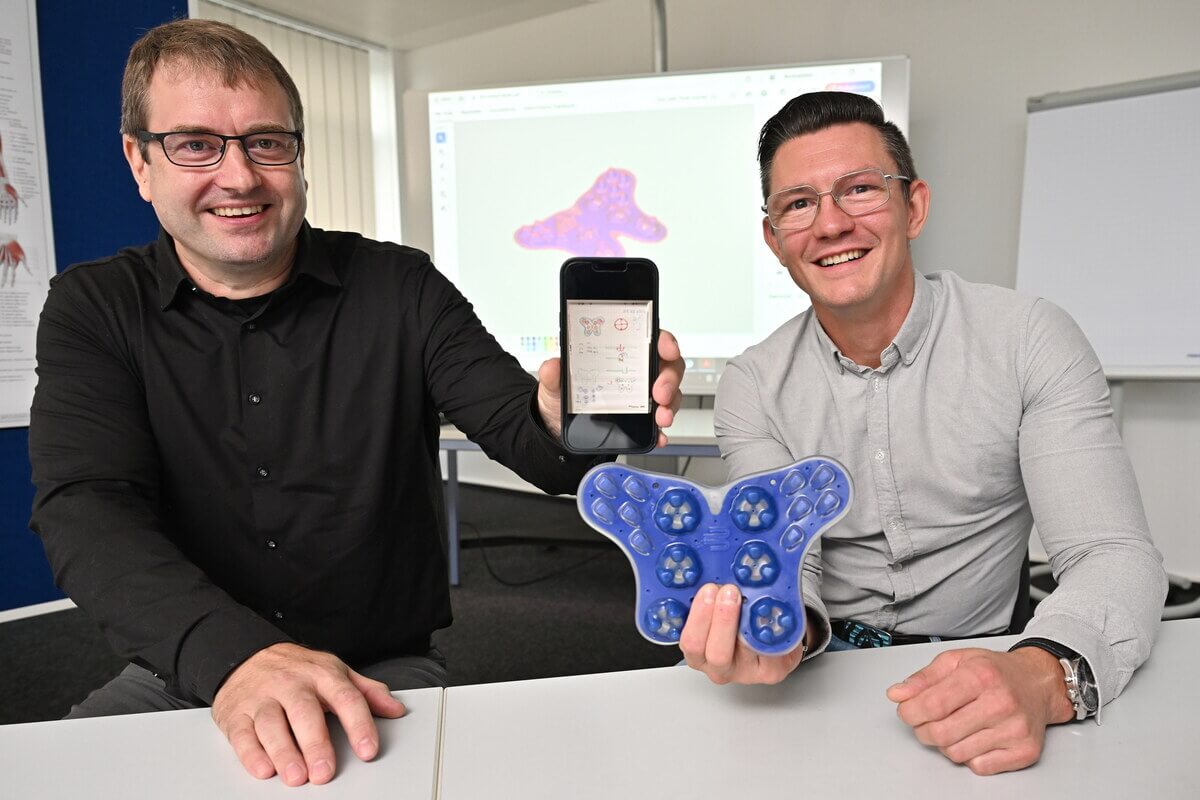
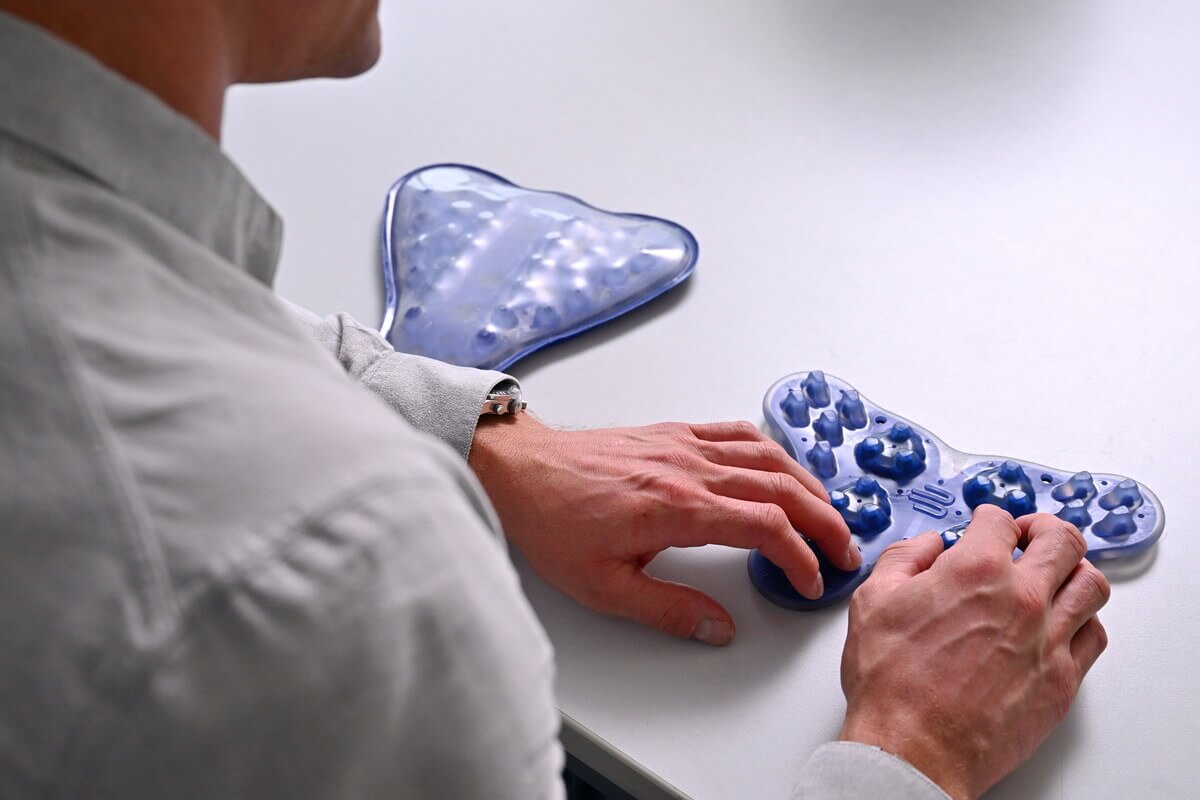
At first glance, the LumboTrain is barely distinguishable from its predecessor. In wearing tests, however, it was rated much more highly – thanks to the new and unique pad with three components. Developing it was a real challenge for André Beck, Dominique Panzer, and Robin Wöllner from the Bauerfeind Innovation Center (BIC). The three developers talk about taking technology to its limits, about false starts, and feelings of happiness during the development process.
How did you approach the development of the new LumboTrain pad?
André: We first asked ourselves how physical therapists treat back pain. Then, in addition to the muscles, we looked at the fascia system and the energy pathways from traditional Chinese medicine. Our objective is understanding the causes of the pain and manipulating the body in a positive way. Before we had the idea with the new pad, we tried all sorts of things and made a good number of false starts to work out what makes sense from a treatment perspective and what options technology gives us.
What was most challenging?
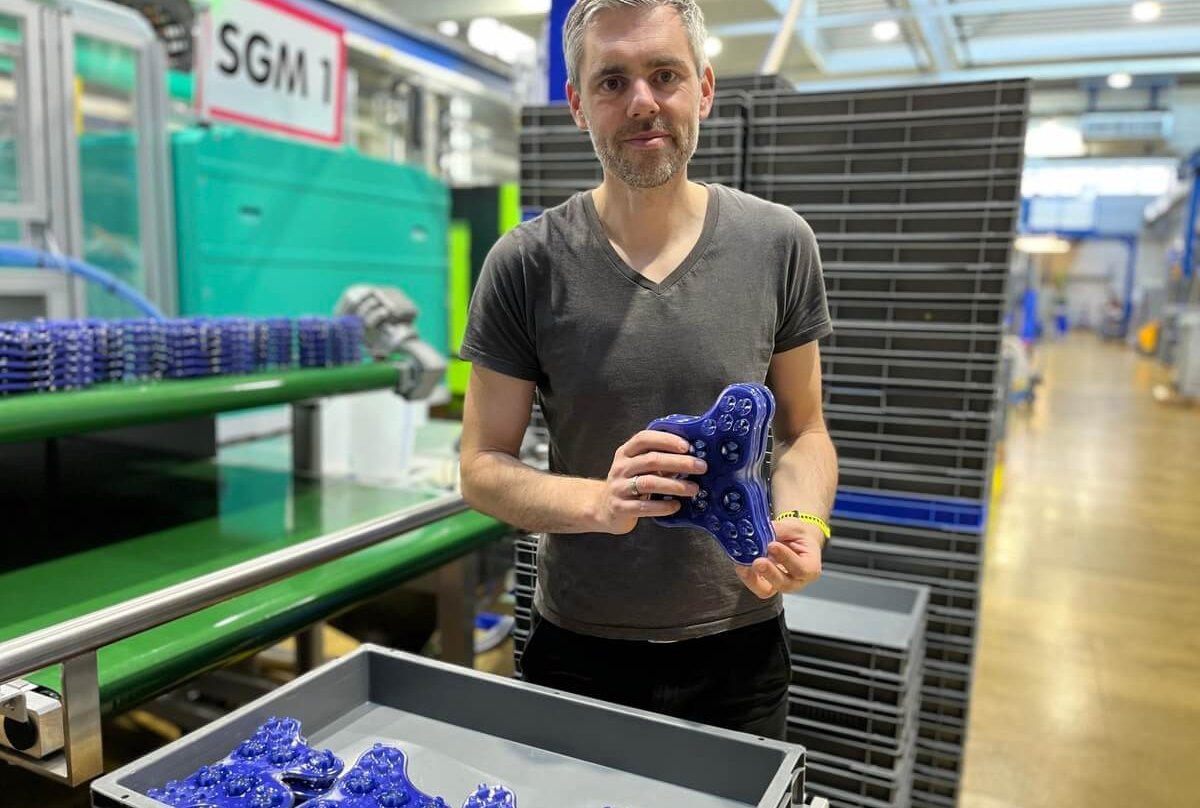
Dominique: Definitely the technical production! When it comes to medical devices, we’re close to the limit of what’s possible in series production. The new pad’s soft material is almost liquid during processing in the hot phase. This contradicts the classic injection-molding process where the material is more like putty that’s injected into the mold. We had to make sure that no bubbles or voids would form. We even had a special machine commissioned.
Robin: It took a long time to design this machine. But now, we can make all three components quickly and economically even though it’s a highly complex product.
How do you come up with your ideas?
Dominique: We had seven or eight different versions of the pad. It’s an iterative search process. Sometimes, you suddenly get an idea when you’re watching the news.
André: ... or when driving or sleeping.
Dominique: Exactly. It just happens and needs time.
Do you then phone each other immediately?
André: It’s more likely that we rush into the other person’s office at eight in the morning with a “crazy” idea. We usually do a freehand drawing then. Sometimes, the guys from Tool Construction and Design kick me out again, saying: “You’re absolutely mad!” [he laughs] We’re all tenacious and spur each other on.
What do you have to bear in mind when it comes to quality?
André: High standards, of course. We performed many tests in the lab to find out the following: what happens at different temperatures? What happens with UV light, salt water, a high level of humidity? The LumboTrain is popular all over the world, so our tests included pretty much everything from 60 degrees ambient temperature and 90% humidity down to minus 20 degrees.
Dominique, how do you approach material selection?
Dominique: I was familiar with the materials from the GenuTrain’s two-component pad. I knew the base plate from the old LumboTrain’s pad. Just like with Lego, you can create a new product from several elements without having to dig too deep. Our colleagues in Production have to enjoy making the LumboTrain, that’s important to us. Of course, it didn’t all work out perfectly to begin with. Some things got a little messy. At the moment, there are issues with a nozzle opening in the machine that doesn’t match the material’s particle size. What happens? It gets clogged up. Only when our colleagues say: “It’s running well,” have we done our job properly.
Robin: Some problems only show up after a certain time because materials wear, for example. Working on these details is challenging. Sometimes, you have to sleep on it and gather ideas for solving little problems.
Do you enjoy this process?
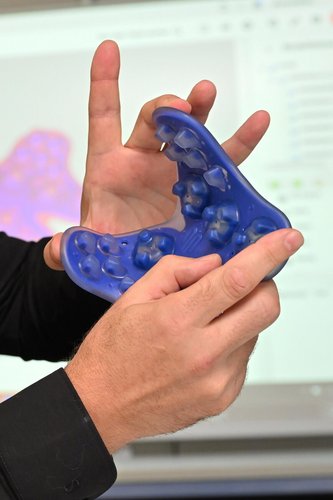
André: Yes, sometimes, you just want to drop it all and give up but it’s an immense feeling of happiness when you hold the product in your hand, knowing it’s been launched.
Dominique: Yes, of course! My favorite part is when the machine suppliers come to us, saying: “Oh my word, what’s going on here? I’m surprised to see it working!”
Robin: And it’s really cool to see this technical process that we’ve created. It makes us proud.
Congratulations! When did you realize that the new LumboTrain would turn out to be a success?
André: After the initial comparative wearing test. That was the first time we noticed that everything we planned in theory works for the consumer and is perceived as a significant improvement during the wearing test. It gave us a real boost.
Robin: We had a concept tool built before ordering the expensive machine. When the process worked with that, I was convinced.
How important is the project to you?
Robin: It’s immensely important! I feel we can be pleased, despite a few hurdles. We didn’t make major mistakes in the thought processes and worked together really well.
Dominique: It was certainly one of the most challenging projects...
André: ... because we broke completely new ground. You have to convince a few people. I remember discussing our idea with Prof. Bauerfeind and Prof. Hess in 2019. We showed them one of the first prototypes. Both of them said: “I don’t think it can work like this.” It took some time for them to be convinced. Then we were able to take the next steps.
About the person:
André Beck, Head of Orthopedics Development, has been working at Bauerfeind for 13 years. He started with work placement in Product Management. The sports scientist writes training plans for patients and athletes on a part-time basis.
Dominique Panzer, Head of Synthetic Material & Tool/Model Design, studied Wood and Synthetic Material Technology and was a Production Manager in a timber company for eight years before joining Bauerfeind in 1994. Born in Kleinwolschendorf, he is an expert in materials and manufacturing processes.
Robin Wöllner, Synthetic Material & Tool/Model Design Team Member, studied Material Technology at FH Jena and has been working at Bauerfeind for ten years. His input was key for the development of the special machine for the LumboTrain project.