Staff, stitches, and systems
Michael Dübler draws everything together
76 circular knit machines, 22 different products, and about 3,700 pairs of stockings per day: The SW1 Team (Knitting Value Stream 1) is always in action. This department produces medical products, sports socks, and circular knit sports products, contributing to a large proportion of Bauerfeind’s circular knit products. 31 team members from six countries working in two shifts are making sure that the systems are running, the quality standards are achieved, and the finished stockings are then further processed. The vast product variety is one of the key features of this department. “We’re the team that makes most items for Bauerfeind’s circular knit segment”, Team Leader Michael Dübler explains.
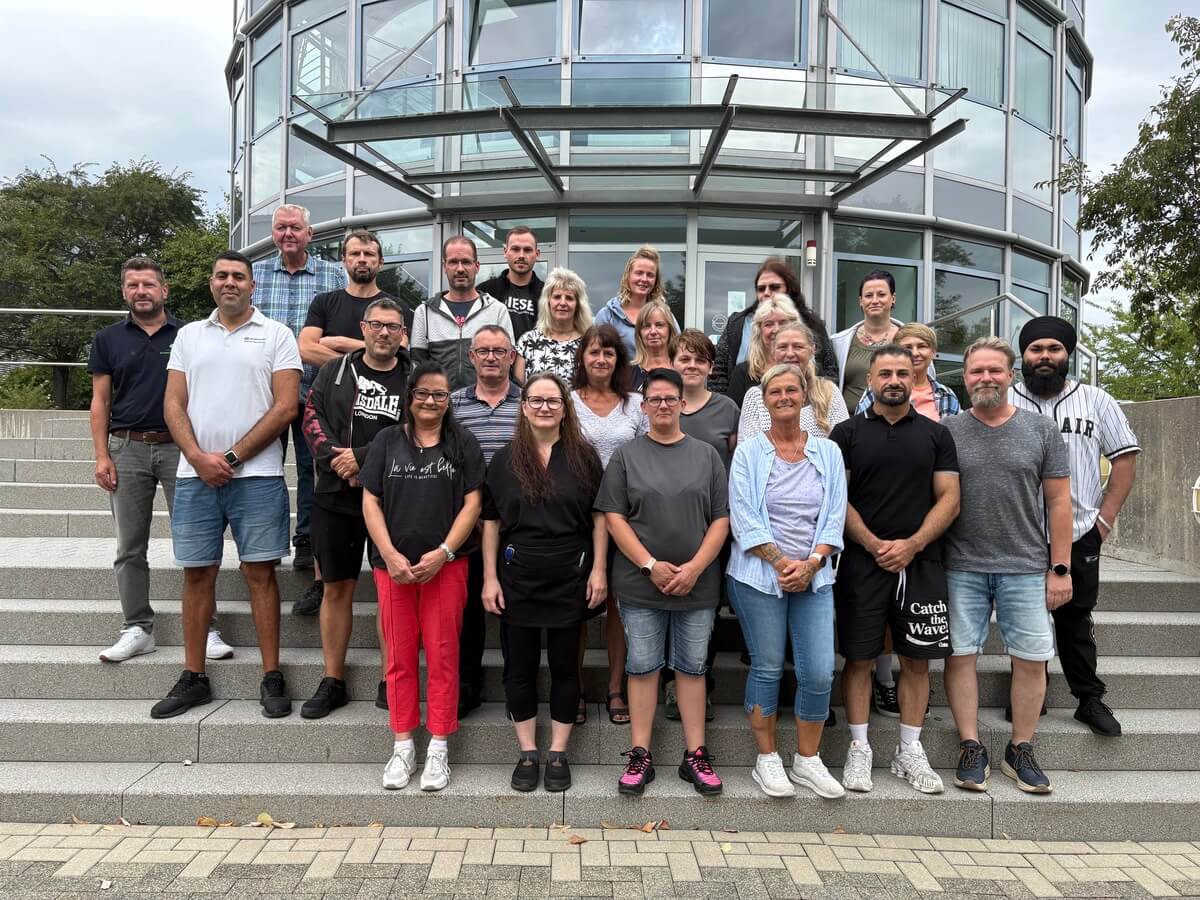
A value stream with many interfaces
SW1 is part of the value stream. Its goal is a smooth flow of goods with short delivery times and minimum temporary storage. To achieve this, the team works closely with many departments, including SW2 and SW3, Dyeing as well as Quality Management, Work Preparation, and Development.
The team covers all sorts of tasks: Machine and System Operators look after five to eight machines, depending on the area. Mechanics take care of maintenance and servicing, Shift Managers are in charge of organization. In the Manufacturing Department, sports items are patched, packaged, and labelled, for example.
Secretly high-tech
Modern circular knit machines work according to highly automated processes. They are networked, knitting programs are applied automatically, and the machines largely manufacture the products autonomously. Whether knee-high stocking, pantyhose, or thigh-high stocking: Each machine can manufacture different products without the yarn having to be rethreaded or the settings having to be changed manually. However, digitalization also comes with new dependencies. “If there’s a problem somewhere, we sometimes cannot continue production,” Michael Dübler reports.
Knitted with a hot needle
With 22 products and three machine manufacturers, experience is particularly important. “Our colleagues aren’t doing the same thing week in week out. There’s a lot of flexibility. My team members switch between the knitting machines every day,” Team Leader Dübler explains. Those who go through the entire qualification journey will be able to manufacture all 22 products. In addition to dexterity and physical fitness, this requires experience most of all and a good eye. “Sometimes, it’s enough for an experienced System Operator to glance over his or her machine. It holds 25 materials and one look confirms it: It’s ok like this.”
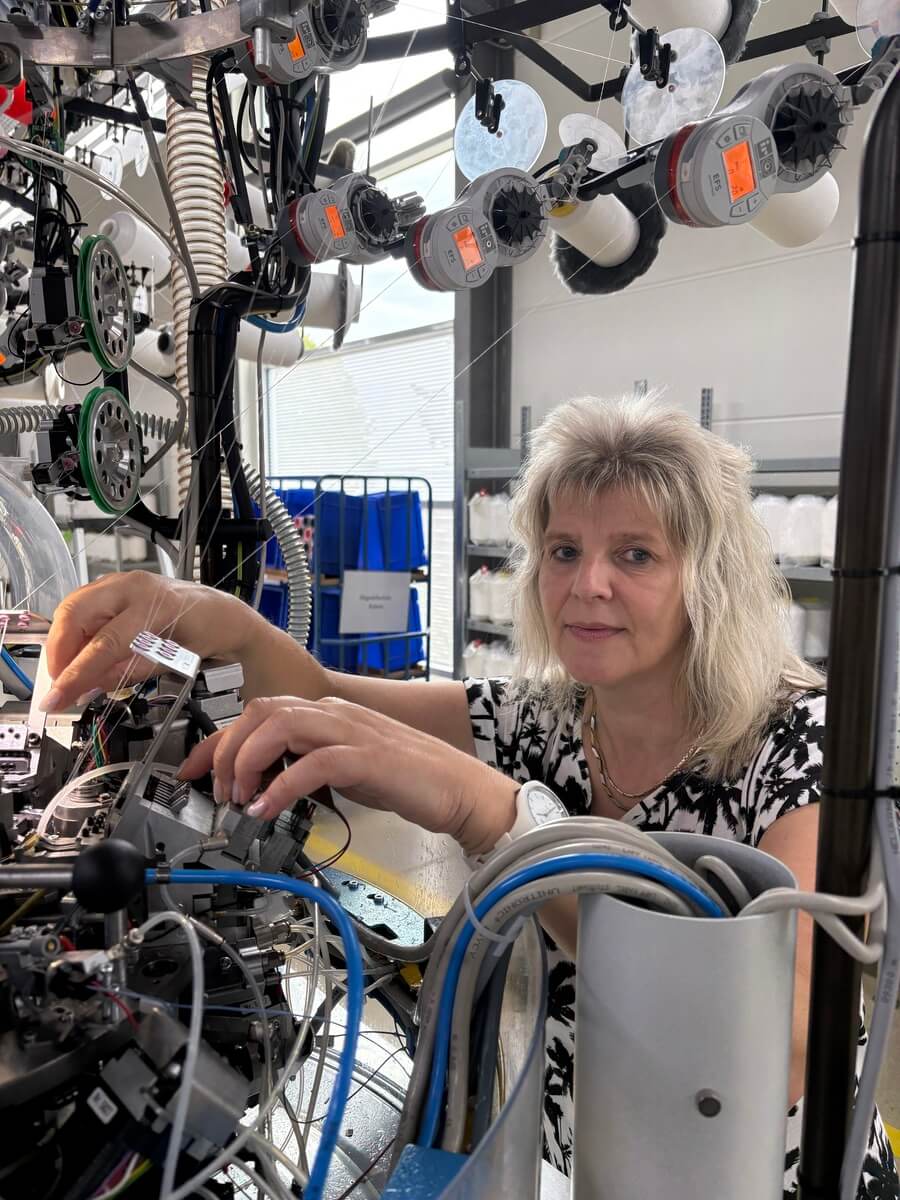
Kerstin is pulling the strings
This experience also needs to be passed on to the next generation. Kerstin Illgen has been working for Bauerfeind for 31 years and knows the different machines, products, and more than 200 materials used. She also helps out in the Manufacturing and Packaging Departments every now and then. She particularly enjoys passing on her wealth of knowledge to new staff members and trainees in the SW1 Team. “You can’t learn everything from books and work instructions. Some things have to be shown in person. With the machines, in particular, experience gathered over years really helps.” Ultimately, it’s the interaction of high-tech and experience that turns a program into a quality product.
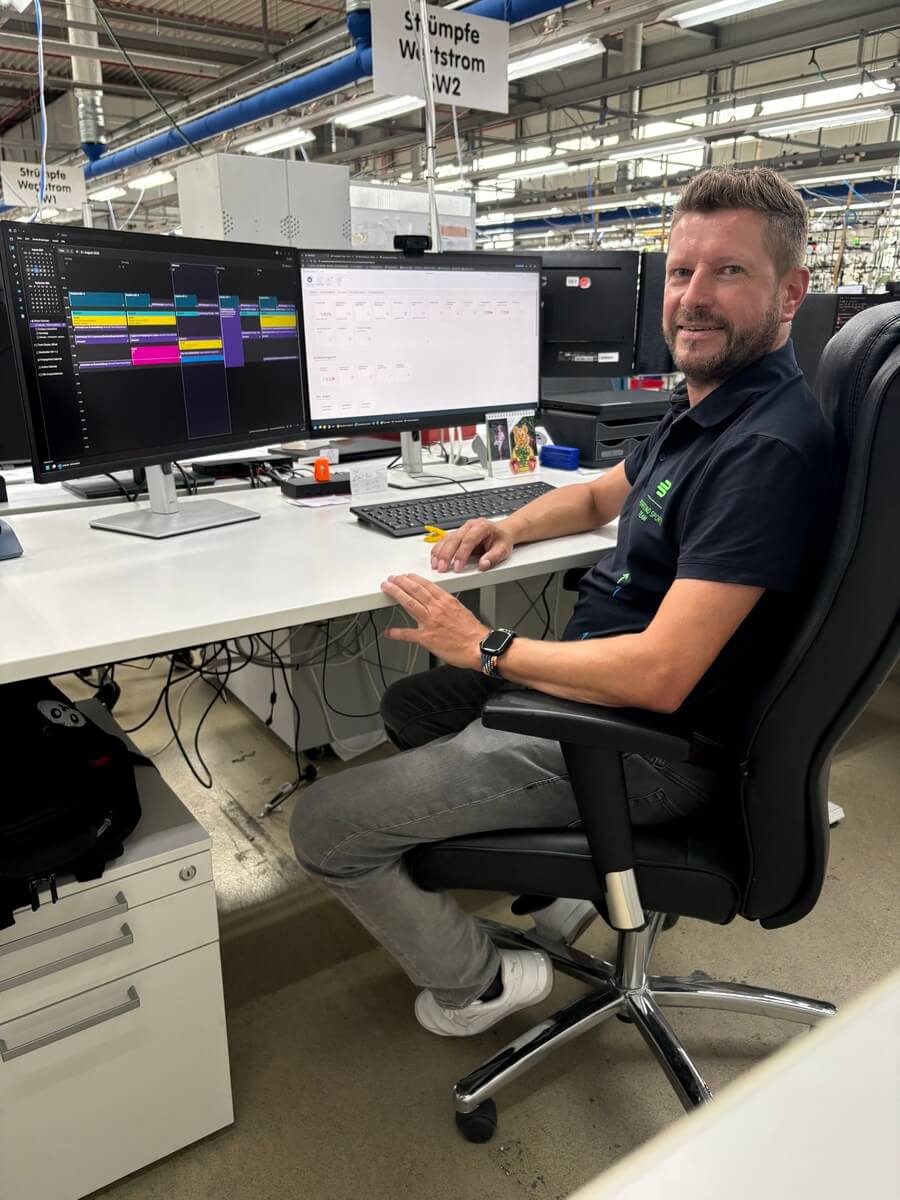
From trainee to Team Leader
Michael Dübler knows Bauerfeind like no other. In 1993, he started his training to become a Machine and System Operator – at that point as the first trainee in his area. This was followed by further training to become an Industrial Specialist. He has been a Team Leader for many years. “And before you know it, 33 have come and gone,” he says, looking back. He describes his day-to-day work as “filled with surprises”. That’s exactly what he likes: “What I enjoy most is daily contact with my colleagues, dealing with people.” Michael Dübler is also active in his private life. He plays in a shawm band and trains a youth football team. Switching off altogether is not always easy for him. The people he works with are very important to him. “When I see that my colleagues happily come to work, and we can reach the specifications together, that’s when I know I’ve done my job.”