Brexit regulations preoccupy Bauerfeind teams
Sending parcels from Zeulenroda, Germany, directly to customers in the UK – no problem at all! At least until the United Kingdom left the European Union. As of January 1, 2021, the country is no longer a member of EU. This brings along various new regulations for goods to be exported to the UK.

Until Brexit, the Bauerfeind UK subsidiary processed its customers’ orders itself, then Bauerfeind sent the goods from Zeulenroda directly to the customers. This no longer works because the UK is now classed as a Third Country, with the result of having to deal with new customs formalities! “Each shipment would have to be declared individually,” Claudia Richter, Export Team Leader, explains. “This is a huge additional effort for us. That is why we have modified the process for the time being.”
Interim solution ensures punctual deliveries
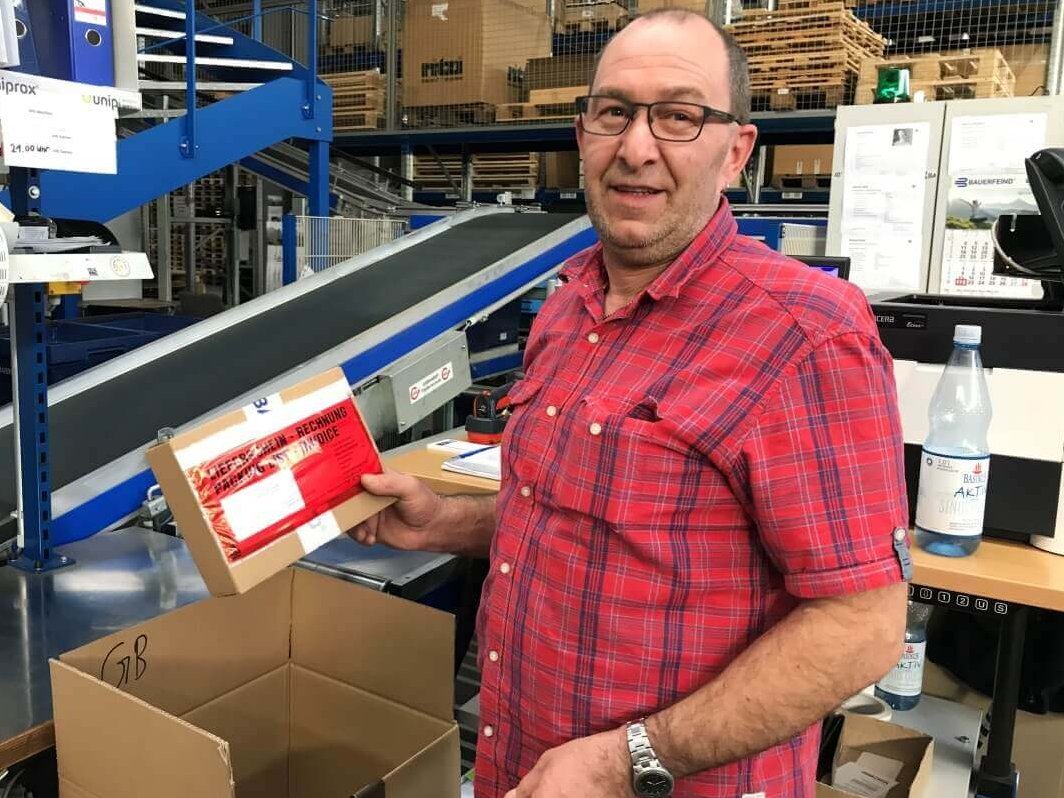
Currently, the Export Team records orders from the UK in its system. And the Logistics Team also had to make modifications: “We prepare the individual parcels, then turn them into a big package which we send to our subsidiary in London,” Julian Musiol, Head of Outbound Logistics, explains. After merely two working days, the package arrives at the warehouse we have rented for this purpose and can be sent on to customers from there. This also guarantees swift deliveries even during the transitional phase: “It’s an amazing effort by everyone involved, thanks to the team’s excellent commitment,” Claudia Richter says.
Collective declaration in progress
The goal is being able to send parcels from Zeulenroda directly to customers in the UK again soon. “In the near future, we are planning on creating an automated customs invoice that includes all the parcels from one day,” Claudia Richter says. This will be implemented together with a parcel service provider who will be in charge of customs clearance for the products from now on. This service provider is currently checking all the modifications that have arisen from the trade agreement made in December. In addition, data protection issues need to be clarified, financial development monitored and new technical conditions created in SAP. “All sub-processes have to be coordinated and work as one unit to ensure the increased effort caused by Brexit remains manageable and to enable us to maintain our delivery reliability,” Claudia Richter says.